Pages

Showing posts with label Classroom Management. Show all posts

Saturday, August 31, 2013

Spark Student Motivation-Graph Yourself

It's Saturday! I honestly believe I forget how glorious Saturdays are during the summer (probably because almost every day feels like a Saturday.) So when back to school hits I remember that there is something so sweet about sipping a cup of coffee and catching up on my blog reading on a Saturday morning!


In yesterday's post, I shared that my students graphed themselves, and I received quite a few comments and questions about it so I wanted to elaborate a little bit more today. The activity is very motivating for my kiddos (and for me) so I am going to link up with the fabulous Joanne at Head Over Heels for Teaching.

Those of you that have read my blog for a little while know that my school is big on differentiation. Earlier this summer I briefly shared about the graphing activity and the book that it came from, you can check it out here.
It is a quick and easy activity that really allows your kiddos to get to know each other, and for you to get to know them quickly. I start by giving giving each student a piece of graph paper that has been set up to create a bar graph. Along the Y-axis I have the graph numbered 0-10. Along the X-axis I have the following subjects written down; math, reading, science, social studies, writing, spelling, and art. I also have three blank spots where students can fill in activities/subjects they would like to add to their graph.

Before I allow the students to make their graph, I graph myself. I model my thinking and explain why I scored myself a 7 in math, a 10 in reading, and a 4 in spelling (I was an awful speller as a kid and it is still my weakest area.) The kids are always surprised that I score myself so low in spelling. (I'm also low in art, I give myself a score of 2!) The fact that I am honest in my graph with them encourages them to be more honest about their graphs.

I have them silently graph themselves, reminding them to be honest about where they think they are on the graph. 10 being really strong, 1 being very weak. As they graph, I walk around and get a quick look at where they think they are in the major subject areas.

When everyone is finished I have them share with the entire class their two strongest categories (normally at least one of them is one that they added-which lets me quickly hear and see something they really enjoy doing.) Once everyone has shared, I ask the kids what they notice-they normally notice that everyone has different things listed as a strength.
Not sure if you can see it, but this little boy wrote help under his two weakest areas.

We then share our lowest two (I don't ask them to share the number they gave it out loud, just the name of the subject.) These are normally both academic subjects. I ask the kids what they notice again once everyone has shared. Everyone has different weaknesses is normally what we are able to come up with.

At this point, I ask my students what should I do as I teacher? How should I teach them if some of them are strong in one topic, but others are weak? They normally tell me that I need to spend time working with the kids that struggle a little more than those that don't. They also come to an agreement that they may be doing different assignments than the person next to them based on their ability! This is where I talk with them about how important it is to be kind and encouraging in our classroom. I remind them that we are a family and we need to support each other. We will never laugh when someone makes a mistake, because our classroom is a place where it is "Okay to be wrong." After our discussion I collect the graphs so I can get a good look at them.

I like doing this activity so early in the year because it really lets me get to know my kids, and it establishes the tone for our classroom. This activity helps them understand differentiation at an age appropriate level, and helps them understand that fair isn't everyone doing the same thing, but it is everyone getting what they need.

Do you have your students share their strengths and weaknesses with each other? How do you build your community at the start of the school year?

Don't forget to enter my Back to School Giveaway!

a Rafflecopter giveaway

Saturday, July 27, 2013

Spark Student Motivation-Building a Classroom Community with Collaborative Writing

Happy Saturday everyone! I survived my week of aligning our school curriculum to the Common Core. I'd love to say that I am finished, but now I need to create new assessments and activities for the topics that I haven't taught before. It will be a lot of work, but to me the creating is the fun part!

I'm liking up with Joanne at Head Over Heels for Teaching to share one way that I Spark Student Motivation.

I teach at a smaller private school, so the majority of the kids that enter my classroom were in the same classroom as third graders. Even though the kids know each other, we still work to create a classroom community. There are always new kids that join the group as fourth graders so I like to do some fun, collaborative writing activities to get them comfortable with sharing their writing. One resource that I like to use to do this is Rory's Story Cubes.
Rory's Story Cubes
On each of these cubes is a picture. The students need to add the item pictured on their cube into the story. I normally start and say a sentence or two to start the story. We then go around the story having each child add a sentence or two. Once the students have said their line, they pass their di to someone who doesn't have one (there are only 9 in a box.) The last person to go wraps up the story.

I love doing this because it teaches kids to listen to each other and to build their ideas off their classmates ideas. The stories are verbal, so students who struggle with the actually act of writing are able to do this without a problem. The stories are always silly, which means lots of laughter.

What activities do you use to build a classroom community at the start of a year?


Don't forget to enter my 400 Follower Giveaway, and to stop back tomorrow for the Everyone Wins Giveaway!

Wednesday, July 24, 2013

Things I've learned from Teaching

Happy Wednesday! I hope you are having a wonderful week. I've been busy working with a team to align our curriculum Pre-K-6th grade to the Common Core. It has been a busy two days, but we have gotten a lot accomplished!

Before I head off to work, I'm excited to link up with Miss Kindergarten to share Ten Things I've Learned from Teaching.


This year will be my tenth year teaching! Where does the time go?
 http://media-cache-ec2.pinimg.com/originals/62/0f/fb/620ffb207577f10afac7fc6e603434ae.jpg
1. Never stop learning, there is always something you can learn more about. To be a good teacher, you need to be a life-long learner. Even after teaching for ten years I know that I still have a lot to learn.!

 http://media-cache-ak2.pinimg.com/originals/14/1f/31/141f313002ddf7be97866c51b77d3b38.jpg
2. Caffeine is your best friend. A morning coffee is great...but another coffee around 2:00 p.m. can help get you through the day!

 3. Don't forget to partner with parents. You may not understand why parents do what they do, but they are doing the best they can. Do what you can to come alongside them and support them. When they know you want to help them and work with them, they are more apt to work with you.

4. You don't have to grade everything! Nor should you grade everything! Grading every single paper and activity your kiddos do will drive you insane. Choose to grade those things that are truly important.
5. Go to the bathroom whenever your kids are at a special-whether you have to go or not. You never know when you will have time to go again...and "holding it" all day is awful.

6. Be encouraging. Letting your students know that you believe in them will help them to believe in themselves. They will work harder if they know you think they can do it.

7. Be honest with your kids. Don't be afraid to tell them that you aren't sure of the answer to their random question. If at all possible, do take the time to find the answer to the question you didn't know the answer to. Kids know when adults are lying.
 8. Classroom management is everything. Don't get caught into the "yelling trap." If you do, you end the day exhausted and grumpy. Find a way to manage your kids that doesn't involve yelling. If you do this, when you do have to raise your voice (think safety issue) they stop immediately and listen because they KNOW something is seriously wrong.

Funny Confession Ecard: Teacher Confession: Once a child is in my class, I will always refer to him as 'one of my kids' - even when he's grown.
9. Get to know your students. I don't mean just as students and learners, but get to know what they like, what sports they play, what their favorite colors are, what they really care about etc. This is the beginning of building a classroom community...we as teachers are a part of that community. The more we put into it, the better it will become.

10. Have fun! Enjoy what you do. If you don't like a subject or topic you are teaching, fake it. Find some way to make it exciting for you. Doing this will keep the kids excited about learning and being in your classroom.
 

What have you learned from teaching? I'd love to hear your top ten!

Thursday, July 18, 2013

Tune into Technology-Classroom Websites

It is Thursday, so it is time to Tune into Technology with iTeach 1:1 and Learning to the Core.

This week's topic is Classroom Websites. I've used the same website for the last five or six years-I can't remember exactly how long it has been. (Sure sign that I am getting old, right?) Anyway, the site I use is very simple to use and to navigate. I use teacherweb.com.
 
What I like about it is that you can use their  pre-set pages, or you can pick and choose what you want on your own site.You can also choose a background that matches your class theme or switch it up for different holidays.

What I like most about it is the fact that I can list all the homework, tests, and any other important events/activities on my page each night. Parents are able to check there and see what is going on in the classroom. The other thing that I love is that I am able to upload all of my study guides, classroom schedules/newsletters, and project guides to my site. This cuts down on the amount of parent e-mails I receive at night asking for a new copy of a study guide because the one I sent home was misplaced. The parents know they can just download a new copy from my site, huge time saver for all of us!

What classroom websites do you use?

Saturday, July 13, 2013

Spark Student Motivation-Fishing for Work

Happy Saturday everyone! I'm excited for today. My husband and I are running to Target (such a dangerous place for me to go alone) to pick up a new bookshelf for my classroom (and hopefully some great find from the dollar section!)

I'm linking up with Joanne at Head Over Heels for Teaching today to share a way to "Spark Student Motivation." Those of you that have read my blog from the beginning will probably recognize some of the pictures from this post-so I apologize to you now, that is the only problem with summer-a serious lack of pictures.

I try, whenever it is possible and appropriate, to not give my kiddos worksheets. I find that as soon as I pass out a regular worksheet they immediately loose interest. I grew up in the "worksheet kids to death" time, so I try to be a bit more creative to keep their attention. 
I found this idea via Pinterest, although I cannot find the original pin. To do this activity I took a boring worksheet and created task cards from that worksheet. I then wrote a number on the bottom of each of the fish. The students went "fishing."

Once they caught a fish they matched the number of the fish onto the task card and answered it. If they got it correct, they kept the fish. If they missed it, the fish went back into the "pond." (I provided each group with an answer key.) To make it fair the students all had to answer a question before they could fish for a new question.


This activity took a while, but they enjoyed it, and it definitely kept their interest the entire time! It was a fun and very unique way for students to practice a given skill. My goal is to use it once a month, I don't want to use it too much so the "novelty" wears off.

What do you do to motivate your students?

Thursday, June 20, 2013

Book Talk Thursday-Building a Classroom Community

I know some of you aren't on summer break yet...but I am seriously loving being able to sleep past 7 everyday. Those of you who aren't on break yet-hang in there! You are almost finished!
Today I am linking up with *Reading Toward the Stars!* for Book Talk Thursday.


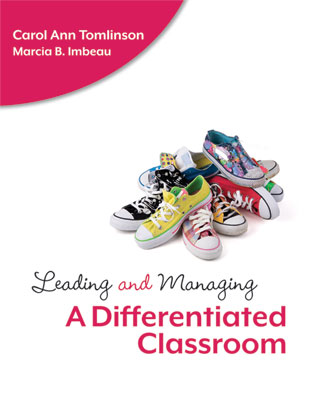
Those of you that have read my blog for a while know that my school is in a three year strategic plan to fully implement differentiated classrooms. Leading and Managing A Differentiated Classroom by Carol Ann Tomlinson has been a huge help to those of us in the school who are working to implement it.
This book lays a lot of groundwork for what a DI classrooms should look like and sound like. The book is broken into three sections. The first is all about Leading a Differentiated Classroom. It spends time sharing the philosophy of a DI classroom and why it is so important to get administration, parents, and students on board to that philosophy at the start of the year. (This section was huge in helping all of the teachers to be on the same page at my school.)

The second section is all about managing a DI classroom. It talks about creating a classroom environment and establishing routines to have your DI classroom run smoothly. It gave more practical suggestions to use in your classroom which I found very helpful last year.

The final section of the book is a Teacher's Toolkit. As teachers, I know you would agree with me that building a safe and caring classroom community is such an important task. There are so many things that we do to establish a strong community. The toolkit has some fantastic suggestions for doing just that. The toolkit gives different things you can do in your classroom to help the students understand that they are all unique learners and that they will all learn at different paces. Some of the toolkit suggestions are:
Creating a glyph about their strengths and favorites.
Playing the "I Wonder Who" Game
A Line 'Em Up game (which has students share things they are both an expert and a novice.)
Creating a Bar Graph of strength and weaknesses-I start the year with this activity.

You give the students an incomplete bar graph that is set up for ten bars. You prelabel the graph with the key subjects (Math, Reading, Writing, Spelling, Science, and Social Studies.) The students are then able to draw the bars for each subject-the larger the bar the better they are at a subject. I let them fill in the last few with anything they would like. Most students put in something they are good at like sports, music, art, cooking etc. I create my own graph and talk them through my reasoning so that they know to be honest-and that it is a safe place to be honest. We then sit together and talk through our graphs. Sharing what we notice. I use this time to talk about this saying:
Looking at the graphs helps the students understand that I shouldn't have students who have a "two" in spelling be doing the same list as those who rated themselves as a "ten" in spelling. Doing this activity does take a while-but it sets the groundwork for the rest of the year. I didn't have any students say "that isn't fair" this year-and I really think it is because of the bar graph activity.

What do you do to establish a caring classroom community each year? 

Don't forget:
 Follow my blog with Bloglovin

Friday, June 7, 2013

Last week of school's Five for Friday

Happy Friday! It is officially summer for me! We had our final half day today. I still have meetings next week and need to finish packing up my room but I am excited. I'm linking up with Doodle Bugs Teaching for Five for Friday!
fiveforfriday

1. On Monday this week my students painted volcanoes that they had created last week. Then on Tuesday we made them erupt! The kids loved it. It was a great way to end our science unit on Earth Movements.


2. On Tuesday, we also had a Roller Coaster Day. You can read more about that here.

3. On Wednesday, we went to Sesame Place. It is an amusement park for our end of the year party and trip. The kids had a blast and we actually managed to make it through the day without any major sunburns!


4. Throughout the last two weeks the students worked on a 1,000 piece puzzle. About five years ago I started to have my students work on a puzzle the last few weeks of school. This puzzle gives the kids something to do at the end of the year instead of annoying each other. If they manage to finish the puzzle within the last two weeks I glue it and frame it. I then hang it in my room. This was how our puzzle looked on Tuesday.

5. Today during the last 30 min. of school the music teacher, my last five kids who were late bus, and I managed to finish the puzzle. Here is the finished product!

What do you use to keep your kiddos occupied during the last few weeks of school? Enjoy your weekend everyone!

Thursday, June 6, 2013

Tricks of the Trade and my Morning Must-Haves

Happy Thursday! It is almost summer break...I can feel the excitement in the air! I'm linking up with Becky at Compassionate Teacher and Jessica at Joy in the Journey for the Tricks of the Trade Thursday.


My system for collecting and returning homework is a simple system. I've used it since I became a teacher. In the morning when students turn in homework they place it into the appropriate slot. In the font of my room, right by the pencil sharpeners are black mail slots. These are plastic and you can find them anywhere.

I used nameplates to label each subject area. When students complete any assignment-in class or homework they place it into the slot. Then all I need to do is grab the papers from each slot to grade them.

Once they are graded I "mail" the students work back to them in their mailbox. They are labeled with each child's name. The students check their box each night and put all papers into their take-home folder. Since they are fourth graders I check to make sure each box is emptied at night-but I tell them and their parents that they need to be responsible to empty their folder each day-both at home and at school. For many of them it is the beginning of building independance in their work.


What do you do to collect and return homework to your students?

I'm also linking up with Across the Hall in 2nd to share some of my favorite things-morning must haves.
 Favorite Graphic
I am a morning thinker...I tend to get my best planning done and have the most creative ideas in the morning. In order to do this I need this:


Coffee makes everything okay! It gets my thinking going and keeps me going for hours!
 
I also need a banana. I have one each day, it is a habit I got into when I was in high school. I used to get leg cramps when I played soccer and eating a banana each day helped keep it away (I now know it is the potassium!) Anyway it is just my go-to for breakfast. 

What are your morning must-haves?

Monday, June 3, 2013

Portfolio Parties

It is my last Monday of the school year! Only 4 more wake-ups! It was also field day today, the rain held off long enough for us to enjoy some games outside!

On Friday, I posted a briefly about our portfolio parties and received a lot of comments and questions about it so I thought I would share more details with you. Unfortunately, I didn't take any pictures of the finished portfolios, but I am hoping I can explain it well enough so you can create your own mind picture.

At the start of the school year I create a file folder for each child. During the first week I have the students write a paragraph about something they did over the summer. I don't grade it, but I do use it to evaluate where my kids are as writers. I label that piece, "first piece" and place it in their folder. As we work on different projects, writing pieces, etc. I make copes of it, or have parents sign and return the project and place it all in their folder. Any large items-books, posters, etc. I store in my classroom closet or in the case of the students' biome posters I have the students complete them a few weeks before the party so they can be on display right up until the party.

The week of the portfolio party I have the students fill out a self evaluation of their work. To do this I actually give them their file, point out their first piece, as well as any other noteworthy pieces I feel we have done for the year. The students then look through their things and complete their evaluations. You can download the evaluation papers I have my kids complete for free here.


I love watching the students go through their folder, it is amazing how many projects or activities they forget about. Watching them look through their folder is like a walk down memory lane. Once the evaluations are complete we glue a cover page onto a manila folder (one of my fellow teachers used large envelopes this year) and have them organize their items with their evaluation sheets into that folder. I give the students post-it-notes to label their favorite pieces so they can show them to their parents first. 


The night of the portfolio party it is kid-centered. The school has an open house where parents and students can come and look at their portfolios. I normally have some type of snack in my room-this year it was food from the Philippines because we tied it in with International Day. I play soft classical music. When the parents and students come in, they sit together and look through the child's portfolio. I'm there to praise and support the child-but it isn't a conference time for me and the parents. It is a time for parents to be one-on-one with their kids.

I love the portfolio party for a number a reasons. I think it is important for kids to evaluate themselves and to be able to express what they are seeing. I also think that students grow so much in a year, but it is normally small incremental growth which can often be overlooked. Portfolios are a great way to show that growth that happened over the school year.

When the families have looked through their portfolio they take everything home (such a great way to clean out the classroom!)

Do any of you use portfolios? I'd love to hear how you use portfolios in your classrooms!


Tuesday, May 28, 2013

Tried it Tuesday-Differentiated Instruction-TAPS and Next School Year Linky

Happy Tuesday everyone. I hope you all enjoyed your long weekend as much as I did. Only 8 1/2 more days of school for me (that is counting today!) I'm "double-dipping today" and joining two linky parties.

First, I'm linking up with Holly at Fourth Grade Flipper for Tried it Tuesday.
If you read yesterday's long post, you know I plan to share many of the ways I have started to differentiate in my classroom. Today I want to share a quick and easy way that you can differentiate your instruction. That is by using TAPS. As a self contained classroom, I try to use TAPS each day. The acronym TAPS represents the ways we should be instructing our students and the ways they should be working on assignments or activities.

T-Total-this is whole group instruction
A-Alone-students working alone, or meeting with you one-on-one
P-Partner-students working with a partner or meeting with a partner
S-Small Group-students meeting and working in groups of 3-4 (I find groups of 5 get a bit crazy)

When I first learned about TAPS I was excited to see that there is a place for whole group instruction in a DI classroom. I was also excited to see that I use TAPS all the time in my classroom. I think most of us who teach elementary students naturally do this. Since learning about it though, I have tried to be more on-purpose with doing TAPS each day. I naturally use TAS (because my students sit at tables groups are easier than partners) so I have had to be a little more creative to add the partner activities. One of the best ways I have found to quickly partner kids up is using "Clock Partners."

It takes about an hour to set up the clocks with the kids during the first few weeks of school, but once you have them set-it is done for the year. I have my students store them in a sheet protector in their binder. You can download a copy of my clock partners chart here.

Do you use TAPS in your room? Which part of TAPS do you have to be more "on-purpose" to use in your classroom?

Even though my year isn't over yet, I'm also linking up with  Finding Joy in 6th Grade for her first linky party.


Here are a few of my plans for next year!

I am super excited about implementing this next year!

I love to read, but during the year I tend to struggle with finding time to read for myself.

Please tell me I'm not the only one who struggles with this!
What do you plan to do next year? Link up with Kim to share your plans for next year.

Monday, May 27, 2013

Differentiated Instruction 101

Happy Memorial Day everyone! I hope you are enjoying your day off and are able to spend time with family and friends. Thank you to those of you that serve or have served in the military. My younger brother is in the Navy, and this day reminds me how thankful I am that he has always made it home safely...but I do know that not everyone has that story. I saw this on Facebook and thought it was fitting for today.
Truth:

As many of you know, my school is working through a three year strategic plan to have our classrooms and our instruction become fully differentiated. This is an exciting goal, but it is a huge undertaking. When I first heard that this was our goal I panicked...I began to wonder if this meant I would ever really teach again, of I would only be tracking kids as they worked through the curriculum. Thankfully, as I began to learn about what DI really is I discovered that I already was doing a lot of differentiation, and that while I had a lot to learn, I was already well on my way to having a DI classroom.

I am thankful to have a wonderful principal. She purchased a few books for us to help us on our journey. Then she ran a book club based on the books throughout the school year to give us a chance to share our successes and failures. The two books we looked at as a faculty were both by Carol Ann Tomlinson. They were Leading and Managing A Differentiated Classroom and How to Differentiate in a Mixed-Ability Classroom

 Leading and Managing a Differentiated Classroom  How to Differentiate Instruction in Mixed-Ability Classrooms


Both of these books share some great facts and basic ideas on how to start differentiating.

The first thing I learned was that you can differentiate in three key areas; content, process, and product.

Content-This is exactly what you think it is, changing the content for those kids that need it. That means giving extra support, or even starting at a different place for those kids who really struggle and are not ready for the content. As well as giving students who are ready for a challenge that push that they need. If I am being honest, this is the one that I do not do naturally, so this is one area I am continuing to work.

I'll give you an example of how I did do this in math recently. We were working on long division. I spent a day reviewing long division with one digit divisors (something I had taught earlier in the year,) but then jumped into two digit divisors for those kids that needed a challenge. By the end of the week I had all but two of my students working on division problems with two digit divisors. The two students that weren't ready for two digit divisors worked on one digit divisors with me. Did they feel bad about it? No, building a solid classroom community is super important in a DI classroom (but that is for another post.)

Process-is another way that we can differentiate. This is what we (as teachers) do all the time, presenting the knowledge and skills in many different ways so that we can reach all of our students as learners. Take learning the states and capitals, you can do a variety of things to help your kiddos learn them; give them a facts sheet, make foldables or flashcards, play a game, learn a song, etc.

Product-Product is the final way to have your students differentiate. This is giving students the opportunity to show what they have learned in a variety of ways. I've always believed students should be able to do more than just take a test to show me what they have learned, but with the exception of reading and writing, I had most students completing the same project. This year I introduced a Tic-Tac-Toe board and Menu board to my students. They loved the personal choice and I loved watching them work! They were on-task and engaged the entire time, talk about a teacher's dream!

I know many of you are working on implementing DI into your classrooms so I will be sharing more about what I have learned, please know I do not claim to know it all, I'm just sharing what I have learned, in hopes that it will help some of you! As a thank you for reading this giant post I would like to give you my South Menu board for free in my TPT store. It will be free until Tuesday afternoon, so grab it while you can. If you download it please leave some feedback and let me know what you think.

What do you do to differentiated in your classroom? Do you tend to differentiate content, process, or product?